


A small stain rarely stays small for long
Plumbing Service in Winter Garden, FL is often what homeowners start searching for the moment they notice a damp ceiling stain or an unexplained wet patch on the floor. That little spot may look harmless today, but hidden plumbing leaks can quietly spread through drywall, insulation, subflooring, and framing. The longer it sits, the more likely you are to face mold, structural damage, higher water bills, and a much larger repair. The good news is that wet spots usually leave clues. In many cases, the pattern, location, smell, and timing can point to the source. This guide explains the most likely causes, what to do first, when it becomes an emergency, and how a plumber can fix the problem before the damage grows.
What a wet spot is really telling you about your home
A wet spot is not the problem itself. It is the symptom. Water has already traveled from somewhere else and found a place to show itself.
That is why the visible stain on your ceiling or floor is often only the end of the story. The actual plumbing issue may be:
- an active supply line leak
- a drain line leak
- a shower pan or tub drain failure
- a toilet seal problem
- a water heater leak
- a slab leak under the home
- a slow leak inside a wall
- condensation that looks like a plumbing failure
Water usually follows gravity, framing, pipe runs, and the path of least resistance. A stain below an upstairs bathroom may come from a toilet, shower valve, tub overflow, or drain connection. A wet floor in a hallway may trace back to an ice maker line, washing machine hose, or pipe running below the slab. Because household leaks can waste thousands of gallons per year, even a slow drip deserves attention.
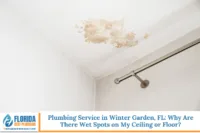
Why ceiling stains often point to hidden plumbing trouble

Supply line leaks above the ceiling
Pressurized water lines are one of the most common reasons a ceiling gets wet. These pipes feed faucets, toilets, showers, tubs, and appliances. Because they remain under pressure, even a tiny crack, loose fitting, or pinhole leak can release water steadily.
Common clues include:
- a stain that grows even when no one is using the bathroom
- bubbling paint or soft drywall
- a drop in water pressure
- higher water bills without more water use
- a faint sound of running water inside the wall
In Florida homes, corrosion and aging piping can contribute to recurring leaks over time. Once water soaks insulation and drywall, the visible stain can spread wider than the pipe leak itself.
Drain line leaks that only appear during use
If the ceiling spot gets worse only when someone showers, drains a tub, runs a sink, or flushes a toilet, the issue may be on the drain side instead of the supply side.
Drain leaks often show up as:
- staining directly below a bathroom
- damp drywall after showers
- water marks that worsen after bathtub use
- musty odors from trapped moisture
Because drain lines are not under constant pressure, they may stay hidden longer. Homeowners sometimes assume the stain is old because it dries between uses. In reality, each shower or flush may be adding more moisture behind the scenes.
Toilet wax ring or flange failure
A failed toilet seal can send water into the subfloor every time the toilet is flushed. That water may not always show around the base of the toilet. Instead, it can slip underneath the flooring and stain the ceiling below.
This problem becomes more likely when you notice:
- a toilet that rocks slightly
- odor near the toilet
- discoloration in the ceiling below the bathroom
- staining that worsens after repeated flushing
A worn wax ring sounds minor, but if the subfloor has stayed wet for long, the repair can expand beyond a simple seal replacement.
Tub, shower, and overflow leaks
Showers and tubs have several leak points: supply valves, grout failure, cracked caulk, drain assemblies, shower arms, and overflow gaskets. A wet spot on the ceiling below an upstairs bathroom often traces back to one of these areas.
A fast way to narrow it down is timing. If the stain appears only when the shower is running, it may be a supply line or shower arm issue. If it happens when water is draining, the culprit may be the tub drain or waste line. If it worsens during baths, the overflow gasket may be failing.
Why a wet floor can mean more than a simple spill
Slab leaks under the home
In many Florida homes, plumbing lines run beneath concrete slabs. When one of those lines leaks, water can move up through flooring, grout lines, baseboards, or cracks. That is one reason a floor can feel damp even when no one spilled anything.
Possible signs of a slab leak include:
- A warm or hot spot on the floor.
- A sudden increase in the water bill.
- The sound of water running when fixtures are off.
- Reduced water pressure.
- Damp flooring, warped flooring, or mildew odor.
- Cracks in flooring or foundation areas.
Hot spots are especially important because they can point to a hot water line leaking below the slab. Left alone, slab leaks can damage flooring materials, encourage mold, and erode soils around the piping path.
Appliance and fixture connections
Not every wet floor is a buried leak. Sometimes the water is coming from a nearby connection that only leaks during use.
Check areas around:
- washing machine hoses
- refrigerator water lines
- dishwasher connections
- water heater pans and relief piping
- sink shutoff valves
- toilet supply tubes
These leaks often show up as wet baseboards, cupping flooring, or dampness in the room next door rather than directly under the appliance.
Leaks traveling from walls to floors
Sometimes the wet floor is just where the water settles. The source may actually be inside a wall. Water from a supply line leak can run down studs and collect under laminate, tile, or vinyl before it becomes obvious.
That is why a plumber will not stop at the first wet location. Good leak diagnosis follows the moisture path back to the origin.
The first steps to take before the damage gets worse

The first response matters. Fast action can reduce drywall damage, flooring loss, and mold risk.
Do this as soon as you notice a wet spot:
- Stop using nearby fixtures until you know more.
- If the leak appears active, shut off the home’s main water valve.
- If the stain is below a water heater, turn off the unit according to manufacturer instructions and call for help.
- Move rugs, furniture, or electronics away from the wet area.
- Take photos of the stain, damaged materials, and any dripping water.
- Dry what you safely can with towels and fans.
- Watch the water meter. If all fixtures are off and the meter is still moving, that is a strong sign of an active leak.
- Call a plumber if the source is hidden or the spot keeps growing.
EPA guidance also stresses drying wet materials promptly because moisture that lingers can lead to mold, and porous materials may need replacement if they stay wet too long.
Read Plumbing Service in Winter Garden, FL: How to Spot a Hidden Water Leak
Signs your problem has crossed into emergency plumbing territory
Not every leak is dramatic, but many should be treated as emergency plumbing problems.
Call for emergency plumbing help right away when you have:
- water actively dripping from the ceiling
- a bulging ceiling that looks swollen
- water near electrical fixtures, switches, or recessed lights
- sewage odor or suspected drain backup
- a burst pipe
- sudden loss of water pressure throughout the house
- rapid floor warping or spreading saturation
- a leaking water heater
- wet spots combined with visible mold growth or strong mildew odor
A bulging ceiling is especially dangerous. Water can collect above drywall until the material fails. If that happens, part of the ceiling can collapse without warning. Stay out from under it and cut power to the area only if it is safe to do so.
How plumbers find the true source instead of guessing
A skilled plumber does not rely on stains alone. The goal is to confirm where the water is coming from, how long it has likely been happening, and what materials have already been affected.
A plumbing company may use:
- pressure testing on water lines
- fixture isolation tests
- drain tests
- moisture meters
- thermal imaging
- visual inspection of access panels and crawl or attic spaces
- camera inspection for some drainage issues
This is important because the fix must match the cause. A ceiling stain from a wax ring failure needs a very different repair than a hot water slab leak or a pinhole leak in copper piping.
The best plumbers also look for secondary issues, such as damaged subflooring, compromised drywall, deteriorated insulation, and recurring moisture conditions that could cause the same problem again.
Repair options depend on what is leaking and where
There is no single repair for wet spots because the cause can vary so much.
When the fix is relatively small
Some cases involve a direct repair, such as:
- replacing a toilet wax ring
- tightening or replacing a leaking shutoff valve
- repairing a drain connection
- replacing a damaged supply line
- repairing a shower arm or tub overflow gasket
These are the best-case scenarios because the leak is localized and accessible.
When the job grows beyond the pipe itself
Other leaks require more extensive work, such as:
- opening drywall to reach hidden piping
- removing flooring to access saturated subfloor
- rerouting a line that failed under the slab
- replacing sections of old corroded piping
- coordinating plumbing and restoration work after widespread water damage
If the home has repeated leaks from aging pipe material, a plumber may recommend partial repiping or full repiping instead of repeated spot repairs. In some homes, that is the more cost-effective long-term solution.
Winter Garden homeowners should know these Florida plumbing rules

In Florida, contractor licensing is regulated under Chapter 489, and plumbing contractor work falls within that regulated scope. The state’s Department of Business and Professional Regulation provides license verification tools so homeowners can check whether a contractor is properly licensed and active.
For Winter Garden homeowners, permit rules matter too. The city states that most projects require permits, and its building department provides an online permit portal. The city also warns that starting work without the proper permit can lead to code enforcement action and charges up to three times the regular permit fee for after-the-fact permitting
That said, Florida code materials also recognize limited permit exemptions for some minor plumbing work, such as clearing stoppages or repairing certain leaks in pipes, valves, or fixtures, as long as the work does not involve replacing or rearranging valves, pipes, or fixtures. Once concealed piping must be removed and replaced, it is generally treated as new work requiring a permit and inspection.
A practical rule is this: if the repair goes beyond a simple accessible fix, involves concealed piping, includes replacement of plumbing components, or affects code-regulated work like a water heater change-out, check permit requirements first. Winter Garden’s own permit application materials specifically note separate permits for water heater change-outs.
Homeowners may be able to pull certain permits as owner-builders under Florida law, but that exemption comes with restrictions and responsibility for supervising the work. It is not a shortcut around code compliance.
What makes wet spots more common in busy family homes
Some homes develop hidden leaks faster because they have more daily plumbing stress.
Risk factors include:
- older supply lines or fittings
- repeated toilet and shower use
- hard water or corrosive conditions
- heavy appliance use in laundry rooms
- deferred maintenance on water heaters and valves
- small leaks that were patched but never fully repaired
In high-use homes, a minor drip can turn into a ceiling stain surprisingly fast. If you have children, guests, or multiple bathrooms in constant use, a leak may cycle on and off all day, soaking materials before anyone notices.
How to lower the chances of another hidden leak
Prevention is never perfect, but it helps.
Smart habits that reduce future water damage
- Check your water bill for unexplained spikes.
- Inspect under sinks and behind toilets every month.
- Replace aging washing machine hoses and ice maker lines before they fail.
- Recaulk shower and tub joints when they crack.
- Watch for soft flooring near tubs, toilets, and water heaters.
- Learn where your main water shutoff valve is.
- Schedule plumbing inspections if your home has older pipes or recurring leaks.
- Consider leak detection or flow monitoring devices that alert you to unusual water use or moisture.
EPA notes that leak detection and flow monitoring devices can help homeowners identify irregular water use and catch problems earlier, before hidden leaks cause major damage.
Do not ignore the “small” warning signs
A faint stain, a musty smell, a loose toilet, or a floor that feels slightly warm can all be early clues. Waiting for visible dripping usually means the water has already moved through multiple layers of the house.
When a small wet spot turns into a major repair bill
Wet spots on your ceiling or floor usually mean one thing: water is escaping where it should not. Sometimes the cause is simple, like a bad toilet seal or a loose supply line. Sometimes it is more serious, like a slab leak, hidden drain failure, or aging pipe problem. The fastest way to limit damage is to treat the stain like a warning, not a cosmetic issue. Shut off water if needed, stop using nearby fixtures, document the damage, and bring in a qualified plumber to pinpoint the source. In Winter Garden, that also means paying attention to licensing, permit rules, and code compliance so the repair is done properly the first time.
Plumbing Service in Winter Garden, FL – Florida Best Plumbing LLC

When wet spots show up on your ceiling or floor, we know you do not want guesswork. At Florida Best Plumbing LLC, we provide dependable plumbing service in Winter Garden, Florida and the prominent surrounding areas. We inspect the problem carefully, find the real source, and recommend the right repair for your home. Whether you are dealing with a hidden pipe leak, a toilet problem, a water heater issue, or urgent emergency plumbing, our team is ready to help. We believe homeowners deserve clear answers, honest service, and responsive support when water damage is on the line. Call us at (407) 683-6644 or fill out our contact form today to schedule service with a plumber who takes your home seriously.
Frequently Asked Questions
1. Can my homeowners insurance cover water damage from a plumbing leak?
Homeowners insurance often covers sudden and accidental water damage from a plumbing failure, but coverage can depend on the policy details and the cause of the leak. For example, damage from a burst pipe or an unexpected supply line failure may be handled differently than long-term neglect, repeated seepage, or unresolved maintenance issues. Coverage for the actual pipe repair may also differ from coverage for drywall, flooring, or personal property damage. It is smart to take photos, keep repair invoices, and report the issue quickly. Review your policy language carefully and ask your insurer what documentation they need before cleanup or major reconstruction begins.
2. Should I call a plumber or a water damage restoration company first?
If you do not know where the water is coming from, start with a plumber. The leak must be stopped before cleanup is truly effective. A restoration company can dry materials, remove damaged drywall, and help reduce mold risk, but they usually are not the trade that repairs the plumbing source. In many cases, both services are needed. The plumber handles leak detection and repair, while restoration addresses moisture inside walls, ceilings, insulation, and flooring. If the ceiling is sagging, the leak is active, or water is near electrical components, treat it as urgent and get professional help quickly so the damage does not spread.
3. Are leak detection devices worth installing in a house?
For many homeowners, yes. Leak detection devices can provide early warnings before a hidden plumbing issue turns into major water damage. Some sensors sit near water heaters, sinks, laundry appliances, or toilets and sound an alarm when moisture is detected. Others monitor flow patterns for the whole house and can alert you when unusual water use suggests a hidden leak. Some advanced systems can even shut off the water automatically. These devices do not replace regular maintenance, but they can be especially valuable in older homes, vacation properties, or busy households where small leaks may go unnoticed for too long.
4. Can hard water make plumbing leaks more likely over time?
Hard water can contribute to plumbing wear over time because mineral buildup may collect inside pipes, valves, fixtures, and water-using appliances. That buildup can restrict flow, place more stress on components, and reduce the life of certain plumbing parts. In some homes, corrosion and mineral scale together can lead to recurring drips, valve failures, and fixture problems. Hard water does not guarantee a leak, but it can be one factor behind chronic plumbing issues, especially in aging systems. If you are seeing repeated repairs, low flow, or mineral deposits on fixtures, ask a plumber whether water quality is affecting the system.
5. What should I keep on hand at home in case a leak starts suddenly?
Every homeowner should know the location of the main water shutoff valve and keep a few basic items ready: clean towels, a bucket, a flashlight, a wet/dry vacuum if possible, and the contact number for a trusted plumbing company. It also helps to keep a simple phone note with your water account details, insurance contact information, and photos of your shutoff valves so other adults in the home can act quickly. If a leak starts, speed matters. Being able to shut off the water, move belongings, document the damage, and call for repair right away can significantly reduce the cost and severity of the problem.
Disclaimer: This article is for general information only and is not legal, code, insurance, or project-specific plumbing advice. Permit, licensing, and repair requirements can vary by property, scope, and local enforcement.
Read Plumber in Winter Garden, FL: Can the Source of a Slab Leak Be Found?

Water Heater Replacement in Winter Garden, FL: Can Carbon Monoxide Leak from an Old Unit?
When a Failing Water Heater Becomes More [...]
Water Heater Replacement in Winter Garden, FL: The Risks of Incorrect Installation
Water Heater Replacement in Winter Garden, FL [...]
Plumbing Service in Winter Garden, FL: Why Are There Wet Spots on My Ceiling or Floor?
A small stain rarely stays small for [...]
Plumbing Service in Winter Garden, FL: How to Spot a Hidden Water Leak
The Leak You Don’t See Is Usually [...]
Plumber in Winter Garden, FL: How Serious Is a Slow Leak Behind Your Wall?
A small drip can turn into a [...]
Plumber in Winter Garden, FL: Can the Source of a Slab Leak Be Found?
Plumber in Winter Garden, FL is often [...]