


A small drip can turn into a major repair faster than most homeowners expect
Plumber in Winter Garden, FL is often the search people make only after they notice a stain, smell something musty, or hear water moving when no fixture is on. That is the problem: a slow leak behind your wall usually stays hidden until the damage spreads. The longer it runs, the more moisture soaks drywall, insulation, wood framing, and nearby flooring. In Florida’s humid climate, that trapped moisture can also feed mold and indoor air problems if it is not dried quickly. The good news is that a hidden leak can be found, contained, and repaired before it becomes a full restoration project. The real question is not whether a slow leak matters. It is how quickly you act once the warning signs appear.
Why a slow leak behind a wall is rarely “minor”
Many homeowners assume a slow drip is harmless because it is not flooding the room. In reality, hidden plumbing leaks are serious because they create damage out of sight. Water can travel down studs, spread into baseboards, soften drywall, and collect in insulation before the surface shows obvious symptoms. By the time paint bubbles or a wall feels soft, the leak may have been active for days or weeks. EPA guidance notes that hidden moisture and leaks around pipes inside walls are common places for mold to develop, and the agency stresses that moisture control is the key to mold control.
That makes a slow leak a plumbing problem, a building problem, and sometimes a health concern at the same time. In a place like Winter Garden, where heat and humidity can make drying slower, delayed action can raise the cost of repairs. Water-damaged materials may need more than a simple pipe fix if the area was left wet too long.
What a hidden plumbing leak can damage inside your home

Drywall and paint usually show the first clues
Drywall absorbs moisture quickly. You may notice:
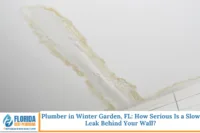
- yellow or brown stains
- bubbling paint
- peeling wallpaper
- soft or crumbly wall surfaces
- swollen trim or baseboards
These are surface warnings, not the full extent of the damage. The wettest area is often deeper inside the wall cavity.
Insulation can stay wet long after the pipe is repaired
Insulation inside exterior or interior walls can trap water. Once saturated, it loses performance and may need replacement rather than simple drying, especially if moisture has lingered. That can affect comfort, energy efficiency, and the drying timeline after a repair. EPA materials on mold and hidden moisture specifically identify wall cavities and the back side of drywall as problem areas.
Wood framing can weaken over time
A slow leak does not usually cause immediate structural failure, but repeated exposure can lead to wood swelling, rot, and fastener corrosion. The danger is cumulative. The leak you ignore for one month is not the same leak by month six.
Flooring and adjacent rooms may also be affected
Water follows gravity and the path of least resistance. A leak behind a second-floor wall can show up as a ceiling stain below. A leak near a bathroom wall may reach vanity cabinets, subflooring, or hallway trim. That is why a professional plumbing service does not stop at the first visible stain. It checks the migration path.
Warning signs that usually mean the leak is already active
A hidden leak behind the wall often gives subtle signals before it becomes obvious. Pay attention to these signs:
- A sudden increase in your water bill without higher household use.
- A musty odor that does not go away with normal cleaning.
- Bubbling paint, warped trim, or damp drywall.
- Mold spots appearing near baseboards, corners, or around plumbing walls.
- Faint dripping, ticking, or running-water sounds when fixtures are off.
- Warm spots on a wall or floor near hot water piping.
- Low water pressure in part of the house.
These clues do not confirm the exact source, but they strongly suggest you need a plumber to inspect the system. EPA and CDC guidance both connect hidden moisture with mold risk, especially when wet materials are not dried quickly.
How fast can mold start after a wall leak?
This is one of the most important parts of the discussion. The EPA says that if wet or damp materials are dried within 24 to 48 hours after a leak or spill, mold often will not grow. CDC guidance is similar, warning that mold can grow when buildings are not dried out within 24 to 48 hours after water exposure.
That does not mean every leak becomes a mold emergency in two days. It means the clock starts early. Once moisture is trapped behind drywall, you may not see the problem even while mold begins developing out of sight. In practical terms, a slow leak deserves the same urgency as other emergency plumbing issues if there is active water intrusion, visible damage, or a persistent odor.
Why Florida homes should not ignore hidden water issues

Florida homes face year-round humidity, heavy rain events, and long cooling seasons. That matters because wall cavities do not dry as easily when the surrounding air is already moist. In addition, condensation lines, water supply lines, shower valves, and aging pipe connections can all create hidden leak conditions that mimic each other.
Older homes may have past plumbing repairs, mixed piping materials, or previous wall patches that make leak tracing harder. Newer homes are not immune either. A poor connection, failed valve, cracked fitting, or appliance line issue can still produce a slow leak behind finished surfaces. The point is simple: the size of the drip is less important than the duration and location of the moisture.
Where these leaks usually start
A plumbing company investigating a hidden wall leak commonly checks these sources first:
- supply line pinhole leaks
- loose or failed fittings
- shower valve bodies
- tub drain and overflow assemblies
- toilet supply or flange-related seepage on shared walls
- ice maker or refrigerator lines in adjacent walls
- water heater connections
- repipe transition points
- AC condensate drain issues near shared chases
Florida law defines a plumbing contractor broadly enough to include installing, maintaining, repairing, altering, or extending plumbing systems, water supply systems, venting, and related piping. That is one reason hidden leak repair should be handled by qualified professionals when the cause is not obvious.
When a slow leak becomes an emergency plumbing call
Not every leak starts as a burst pipe, but some situations should be treated as emergency plumbing right away. Call for urgent help when:
- the water meter keeps moving while all fixtures are off
- drywall is sagging or bulging
- water is near electrical outlets, switches, or panel areas
- you see active dripping from a ceiling
- the shutoff valve will not stop the flow
- the odor suggests mold or prolonged saturation
- the leak involves a hot water line or slab-adjacent wall
In those cases, delaying service can increase damage to multiple parts of the home. A fast plumbing service response may prevent wall removal from becoming a much larger restoration project.
Read Plumber in Winter Garden, FL: Can the Source of a Slab Leak Be Found?
How plumbers find a leak without tearing up the whole wall
Experienced plumbers do not start by opening every suspect area. Most begin with a targeted diagnosis. Depending on the symptoms, they may use a combination of:
- visual inspection of fixtures and access panels
- pressure testing
- moisture readings
- thermal imaging
- acoustic listening tools
- meter checks to confirm continuous flow
- limited, strategic wall opening only after narrowing the source
That matters because good leak detection reduces unnecessary demolition. Instead of guessing, the plumber identifies the most likely path of water, confirms the failed section, then recommends repair options.
Repair choices depend on the real cause, not just the wet spot
Spot repair
A localized repair makes sense when the leak comes from one failed fitting, one short section of pipe, or a single valve assembly. This is often the most cost-effective solution when the rest of the plumbing system is in good condition.
Section replacement
If corrosion, repeated pinhole leaks, or poor prior workmanship appears in one run, replacing a longer section may be smarter than patching only the obvious failure.
Broader system evaluation
If the home has recurring leaks, aging materials, or multiple weak points, the plumbing company may recommend a deeper system review. Repeated wall leaks usually indicate a bigger pattern, not random bad luck.
Permits, licensing, and local compliance in Winter Garden and Orange County

Homeowners in Winter Garden should take local permitting and state licensing seriously. Florida’s DBPR states that certified contractor licenses are statewide, while registered licenses are limited to specific jurisdictions. Florida statutes define the scope of a plumbing contractor and confirm that plumbing work belongs within licensed trade practice.
On the local side, Winter Garden’s building FAQ says a permit applies to the construction, alteration, modification, repair, equipment, maintenance, removal, and related work on buildings and attached appurtenances. Orange County’s plumbing permit page also outlines plumbing permit submission requirements, owner-builder disclosures for homeowners doing their own work, and notes that a Notice of Commencement is required if the value of work exceeds $2,500.
Because permit rules can vary by scope, the safest approach is to work with licensed plumbers who know when a repair, reroute, repipe, water heater change-out, or wall-access project requires permit handling and inspection. This is especially important if the repair expands beyond a simple visible fixture issue.
What you should do the moment you suspect a leak
Here is the best first-response plan:
- Turn off the nearest fixture valve if the source seems isolated.
- Shut off the home’s main water supply if the leak is active or uncertain.
- Move furniture, rugs, and electronics away from the affected wall.
- Take photos of stains, bubbling paint, and damaged materials.
- Avoid cutting into the wall near wiring or blindly opening large sections.
- Call a plumber for leak detection and repair.
- Start drying the area quickly with airflow once the leak is stopped.
That balance matters. You want to limit damage, but you also do not want to make the repair harder or create safety issues by opening walls without knowing what is behind them.
The real cost of waiting
The pipe repair itself is often not the most expensive part of a hidden leak. The added cost usually comes from everything around it:
- drywall replacement
- insulation removal
- trim and paint restoration
- flooring damage
- mold cleanup
- cabinet replacement
- higher water bills
- longer drying time
- possible temporary room disruption
Insurance industry data shows water damage and freezing remain one of the most common homeowner claim categories, affecting about 1.5 percent of insured homes annually during the 2019 to 2023 period.
That statistic matters because it shows how common water-related damage is. A slow leak may feel small, but it belongs to a category of problems that regularly create expensive repairs.
How to lower the chance of another hidden wall leak
No plumbing system is perfect, but a few habits help:
- schedule periodic plumbing inspections in older homes
- replace aging shutoff valves and weak supply lines
- watch for unexplained water bill spikes
- inspect around tubs, showers, toilets, and water heaters
- address low pressure or recurring clogs early
- avoid ignoring tiny stains or musty smells
- ask about repipe planning if leaks keep returning
The best prevention is early detection. Homeowners usually regret the leak they watched, not the one they checked too soon.
Why fast action protects both your home and your budget
A slow leak behind your wall is serious because it hides the true extent of the damage. What starts as a drip can quietly affect drywall, insulation, framing, finishes, and air quality. In Winter Garden, the combination of moisture and humidity makes delay even riskier. The smartest move is to treat a hidden leak like a time-sensitive repair, not a cosmetic annoyance. A qualified plumber can pinpoint the source, stop the water, explain whether permit compliance is needed, and help you avoid the much bigger cost of long-term damage. If your wall smells musty, looks stained, or sounds wet, the safest assumption is simple: the problem is already bigger than it looks.
Plumber in Winter Garden, FL – Florida Best Plumbing LLC

When you need a plumber for a hidden leak, we know you do not want guesswork. At Florida Best Plumbing LLC, we help homeowners in Winter Garden, Florida and the surrounding areas find the source fast, stop the damage, and make dependable repairs that last. We handle leak detection, plumbing service calls, emergency plumbing situations, pipe repairs, fixture issues, and more with the kind of urgency a wall leak deserves. Our team understands how quickly moisture can spread, which is why we focus on accurate diagnosis and clear recommendations. Call us at (407) 683-6644 or fill out our contact form today to schedule service. We are ready to help protect your home, your walls, and your peace of mind with trusted local plumbers.
Frequently Asked Questions
1. Will homeowners insurance usually cover a slow leak behind a wall?
Insurance coverage depends on the policy language, the cause of the leak, and whether the damage is considered sudden or the result of ongoing neglect. Some policies may help with resulting water damage, but not the cost of fixing the worn pipe or failed fitting itself. Coverage can also be limited if the insurer believes the homeowner had enough warning signs and did not act. That is why documentation matters. Take photos, save invoices, note the date you discovered the issue, and ask your plumber for a written description of the cause and repair performed before speaking with your carrier.
2. How do plumbers confirm the exact location of a leak without opening every wall?
A professional plumber usually combines several methods before cutting into a wall. The process may include checking the water meter for movement, isolating fixture lines, running pressure tests, reading moisture levels, and using listening tools or thermal imaging to narrow the wet area. The goal is to find the source with the least damage possible. In many homes, the visible stain is not directly in front of the leak because water can travel along framing members or pipe routes. That is why targeted diagnosis often saves money compared with random demolition or do-it-yourself guessing.
3. After the pipe is repaired, how long does the wall need to dry before it is closed up?
The drying time depends on how much water got into the wall, what materials were affected, the humidity level in the home, and whether insulation had to be removed. In a mild case, drying may take a couple of days. In a larger saturation event, it can take significantly longer. Closing the wall too soon traps moisture and increases the risk of odor, mold, and repeat damage. A careful plumber or restoration professional may recommend air movers, dehumidification, and moisture checks before the wall is sealed. Dry to standard first, then repair the finish materials.
4. Is one hidden leak a sign that my house needs a full repipe?
Not always. One isolated leak can come from a single failed connection, a manufacturing defect, accidental damage, or one weak fitting. But a repipe discussion becomes more reasonable when leaks start repeating, the home has aging piping, corrosion is visible, water quality has been hard on the system, or repairs are happening in multiple locations. The cost question should focus on the bigger pattern. Paying for wall access and patch work again and again can become more expensive than replacing problem sections in a planned way. A trustworthy plumbing company should explain both options clearly, not push one answer.
5. What should I do before the plumber arrives for a hidden leak service call?
Start by shutting off the main water supply if the leak is active or worsening. Clear the area around the suspected wall so the plumber can access it safely. Put towels or a shallow container under any visible drips, and move furniture, décor, and electronics away from the wet zone. Take photos of the damage and write down when you first noticed the problem, what signs appeared, and whether your water bill changed. Do not cut large openings into the wall unless a professional directs you to. Most of the time, preserving the scene helps the plumber diagnose the source more accurately.
Disclaimer: This article is for general informational purposes only and is not legal, code, insurance, or engineering advice. Permit and repair requirements can vary by project scope and local enforcement.
Read Plumber in Horizon West, FL: Does Water Heater Replacement Improve Home Safety?

Water Heater Replacement in Winter Garden, FL: Can Carbon Monoxide Leak from an Old Unit?
When a Failing Water Heater Becomes More [...]
Water Heater Replacement in Winter Garden, FL: The Risks of Incorrect Installation
Water Heater Replacement in Winter Garden, FL [...]

Plumbing Service in Winter Garden, FL: Why Are There Wet Spots on My Ceiling or Floor?
A small stain rarely stays small for [...]

Plumbing Service in Winter Garden, FL: How to Spot a Hidden Water Leak
The Leak You Don’t See Is Usually [...]
Plumber in Winter Garden, FL: How Serious Is a Slow Leak Behind Your Wall?
A small drip can turn into a [...]

Plumber in Winter Garden, FL: Can the Source of a Slab Leak Be Found?
Plumber in Winter Garden, FL is often [...]