

If you are comparing PEX vs PVC which plumbing option is best for homes in Winter Garden, Florida, the short answer is this: PEX usually wins for indoor water supply, while PVC still has an important role outside and in drains. The right answer depends on your home’s age, slab, water pressure, water quality, and how the pipes are used.
Key Takeaways
- PEX is usually the better choice than PVC for most Winter Garden home repipes and indoor residential plumbing.
- PEX handles Winter Garden’s shifting sandy soil, slab foundations, and fluctuating water pressure better than rigid PVC inside the home.
- PVC is still a strong option for outdoor cold-water service, irrigation, sewer lines, and drain cleaning related DWV work.
- A local winter garden plumber familiar with the Orlando area climate and local water conditions should inspect the system before recommending materials.
- Choosing the right pipe reduces leaks, improves customer satisfaction, and helps protect a winter garden home from costly repair services and water damage.
Understanding PEX Plumbing: What It Is and Why It Matters
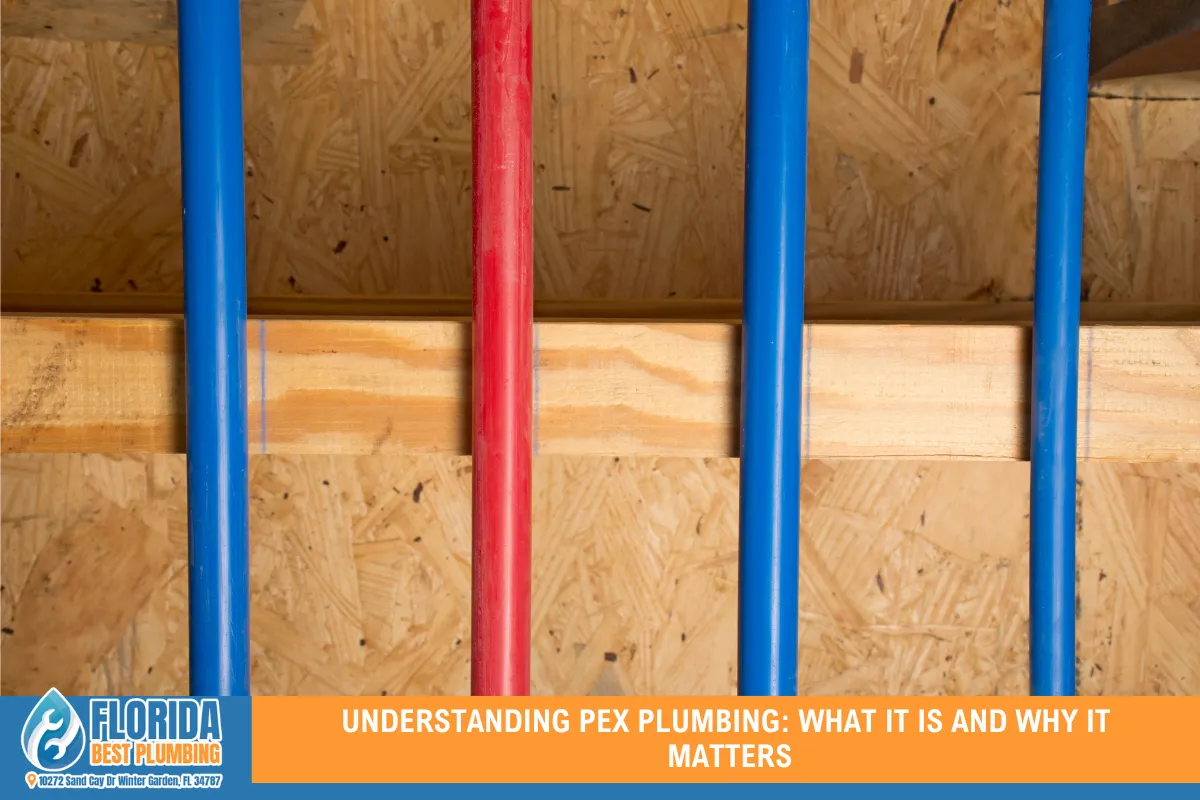
Both PEX and PVC are common plastic pipe options in winter garden residential plumbing, but they are not interchangeable. PEX, or cross-linked polyethylene, is a flexible, often color-coded pipe used mainly for hot and cold water supply lines. PVC, or polyvinyl chloride, is a rigid white pipe commonly used for cold water lines and drain, waste, and vent piping.
- Flexibility: PEX bends around framing; PVC is rigid.
- Temperature resistance: PEX handles hot water; standard PVC cannot.
- Applications: PVC is typically used for drain, waste, and vent pipes, while PEX is more commonly used for water supply lines due to its flexibility and resistance to scale and chlorine.
Neither material is one-size-fits-all. Expert plumbers often combine both in the same plumbing system: PEX inside for water supply and PVC outside or below the slab for drainage.
Climate and Soil Conditions in Winter Garden, FL
As of 2026, winter garden fl pipe decisions should account for heat, humidity, soil, storms, and water quality. Winter Garden’s hot, humid subtropical climate brings summer thunderstorms and hurricane season, which can expose weak plumbing to soil movement, flooding, and sudden pressure changes.
Winter Garden’s sandy limestone soil shifts under slab foundations, particularly during heavy rains and tropical storms, which can stress pipes and drains throughout the year. Homes in Winter Garden often face plumbing challenges due to the region’s unique soil composition and seasonal weather patterns, which can lead to issues like pipe shifts and root intrusion. Winter Garden’s unique climate and soil conditions can lead to specific plumbing challenges, making local expertise essential for effective service.
Freezing is less important here than in northern states, although PEX is flexible and can expand, making it less likely to burst in freezing temperatures compared to PVC, which is rigid and can crack under similar conditions. In Central Florida, heat and UV exposure matter more. The combination of high humidity and tropical climate in Winter Garden creates conditions that can lead to mold growth quickly after water intrusion, especially in homes with slab foundations.
Local water also matters. Winter Garden water is reported around 129 ppm hardness, or moderately hard, according to water hardness data. Hard water contains high levels of minerals, such as calcium and magnesium, which can lead to scale buildup in plumbing systems and appliances.
PEX Pipe: Pros, Cons, and Best Uses in Winter Garden Homes
PEX has become the go-to choice for many expert plumbing teams handling repipes, remodeling projects, and older slab homes in winter garden plumbing. It is flexible, quiet, and well suited for long indoor runs.
Key advantages include:
- Better movement tolerance around slab foundations
- Less mineral buildup from hard water than many older materials
- Quieter operation when valves close quickly
- Fewer hidden joints behind walls
PEX is generally easier and faster to install than PVC, as it does not require fittings for every turn and can be snaked around corners, reducing the number of joints needed. That helps with a plumbing job involving bathroom additions, kitchen upgrades, toilet repair, pipe repair, or plumbing repair after leaks.
The tradeoff is protection. PEX should not be left in direct sunlight on exterior walls or roofs, and it needs proper fittings, crimp tools, supports, and sleeves. It is excellent for whole-home repiping, water heater connections, new construction, older copper replacements, and additions where a licensed plumber needs reliable plumbing with fewer wall openings.
Defining PVC Plumbing: Where It Works Best and Its Limitations
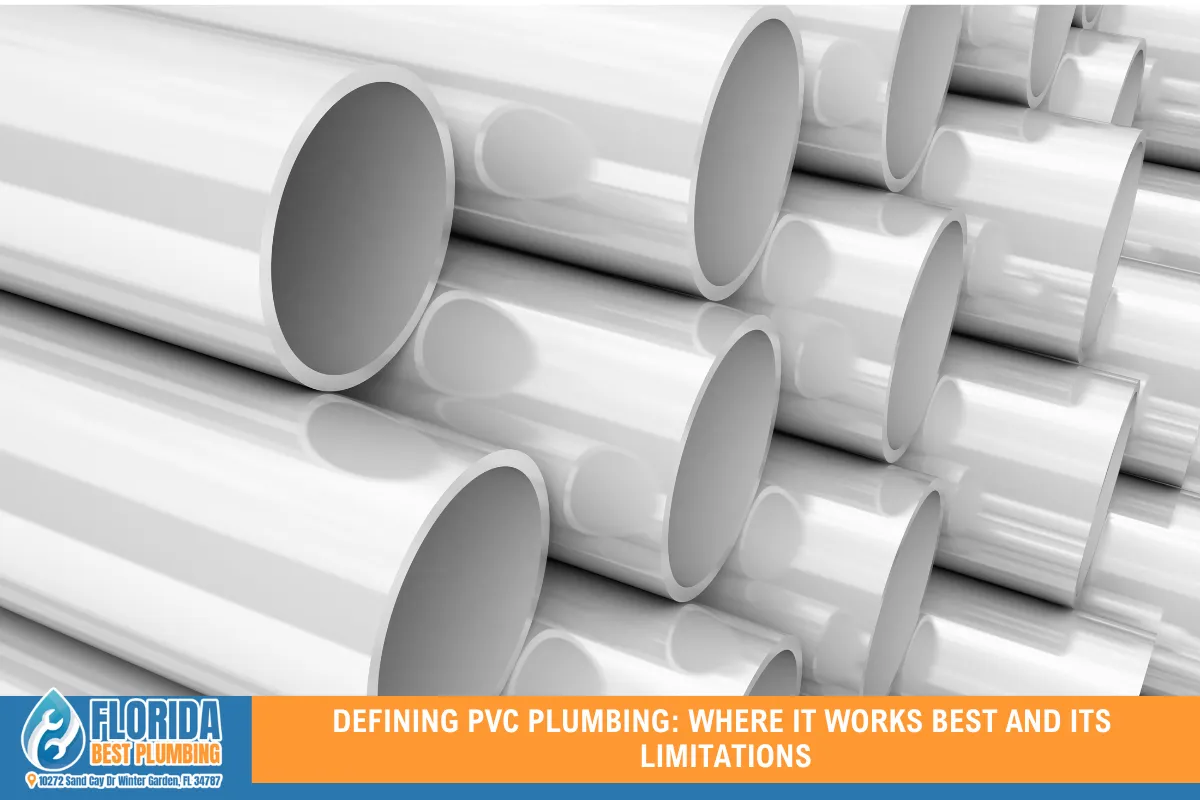
PVC remains widely used by Winter Garden plumbers, especially for drains, exterior underground water mains, irrigation, and some main service lines. PVC and CPVC pipes are highly cost-effective to purchase, and PVC resists corrosion well.
Rigid PVC is commonly used for drainage, waste, vent (DWV) systems, and exterior underground water mains. Rigid PVC is the ideal industry standard for drainage and sewage lines because it resists collapsing under structural loads and maintains a consistent slope required for gravitational wastewater flow. PVC is immune to soil bacteria and chemicals, making it ideal for buried main water lines.
PVC is highly stable underground and can handle exposed configurations better than PEX, making it ideal for the main water line. However, rigid PVC is more vulnerable to cracking from soil movement beneath slab foundations or impact during yard work.
The biggest limit is heat. PVC is strictly banned for indoor hot water lines and is instead used for drainage, waste, vent (DWV) systems, or main outdoor cold-water service lines. Standard PVC cannot be used for indoor hot water lines, as it weakens, degrades, or splits under high temperatures. CPVC is different, but brittle CPVC indoor supply lines can crack or burst due to exposure to treated municipal water containing chlorine or chloramines.
PEX vs. PVC: Side‑by‑Side Comparison for Winter Garden Homeowners
Here is the simplest way to compare both materials for a Winter Garden home.
| Factor | PEX | PVC |
|---|---|---|
| Flexibility | Excellent for tight spaces and shifting slabs | Rigid and more crack-prone |
| Cost | Higher material cost, often lower labor | Lower material cost |
| Lifespan | Decades when protected and installed correctly | Decades in proper drain/exterior uses |
| Heat resistance | Good for hot and cold supply | Not for indoor hot water |
| Water pressure | Helps reduce noise and water hammer | Rigid pipe can amplify noise |
| Best use | Indoor residential water supply | DWV, sewer lines, irrigation, main outdoor cold-water service |
PEX generally outperforms PVC for indoor hot and cold water supply lines, especially in older local homes with shifting slabs. PVC often wins on upfront material cost and remains standard for many outdoor, irrigation, and drainage applications in the Orlando area. Think “right material for each part of the system,” not one pipe for everything.
Comparing Installation: Labor, Tools, and Time
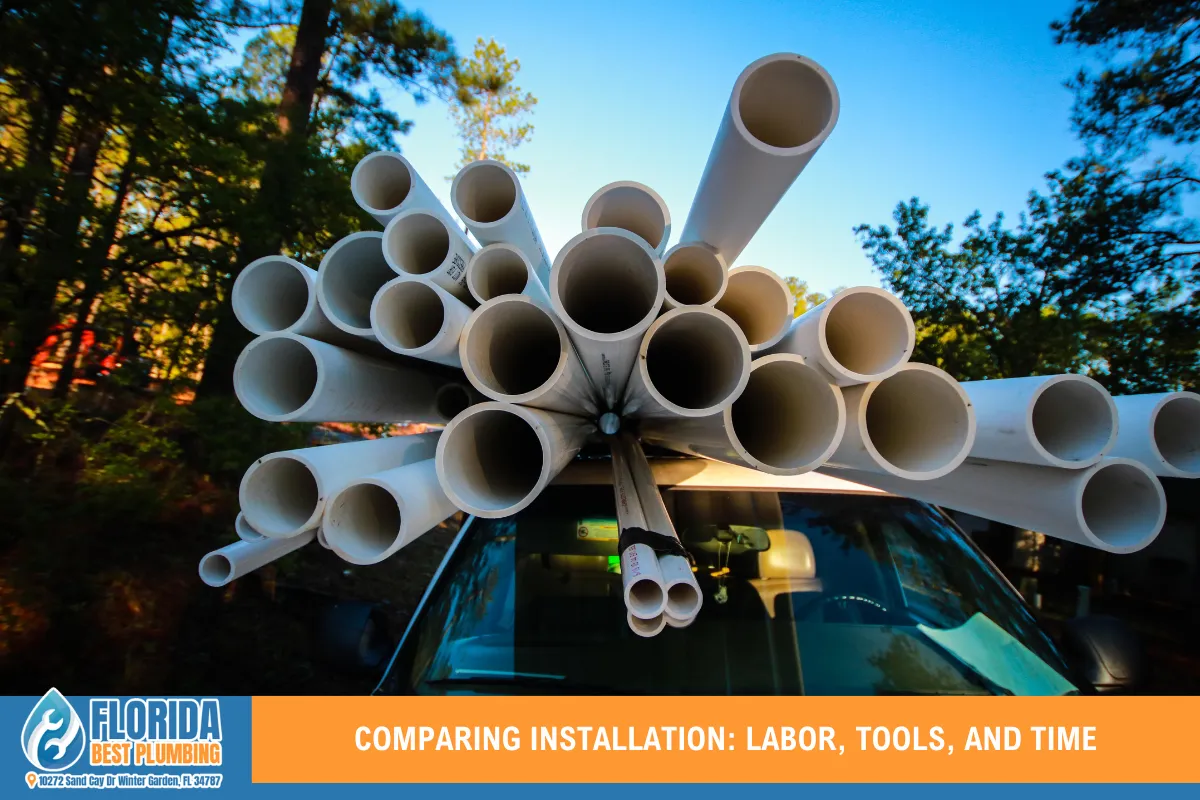
PEX installation is generally quicker and less labor-intensive than PVC. Its flexibility reduces the number of joints and fittings needed, which simplifies the plumbing job and minimizes potential leak points. PEX can be installed with basic tools and is less disruptive to existing structures, making it a preferred choice for remodeling projects in Winter Garden homes. Conversely, PVC requires precise cutting and solvent welding for joints, demanding specialized tools and more installation time. Despite this, its rigidity provides stability in underground applications where soil conditions are challenging.
How Local Plumbing Codes and Building Practices Affect Your Choice
Winter Garden and Orange County follow Florida plumbing codes, so material choice is not just preference. PEX is code-approved for many interior potable water lines when installed under the correct standards, such as ASTM and NSF potable-water listings; homeowners can learn more about potable product certification from NSF.
PVC is typically not used for interior hot water lines. PEX or CPVC is usually preferred near water heaters, including tankless systems, though CPVC has its own brittleness concerns. Local inspectors may also check pipe supports, insulation, slab sleeves, and transition fittings between copper, PEX, PVC, and CPVC.
A licensed winter garden plumber who stays current with 2024–2026 code updates and manufacturer warranties can prevent failed inspections and future repair problems.
Impact on Water Pressure, Noise, and Everyday Comfort
Pipe material affects daily life more than many homeowners expect. PEX’s smooth interior and flexible runs can help maintain steadier water pressure to showers, laundry rooms, dishwashers, and distant plumbing fixtures in long single-story homes.
PEX also helps reduce banging or “water hammer” when valves close quickly. Rigid PVC and older metal pipes tend to transmit more vibration. Correctly sized PVC drain lines, however, are still excellent for moving wastewater quietly and efficiently in residential and commercial services.
When scheduling repair services, mention low pressure, gurgling sounds, clogged drains, drain problems, water heater issues, or temperature swings. These details help the plumber choose the right equipment and recommend the right repair.
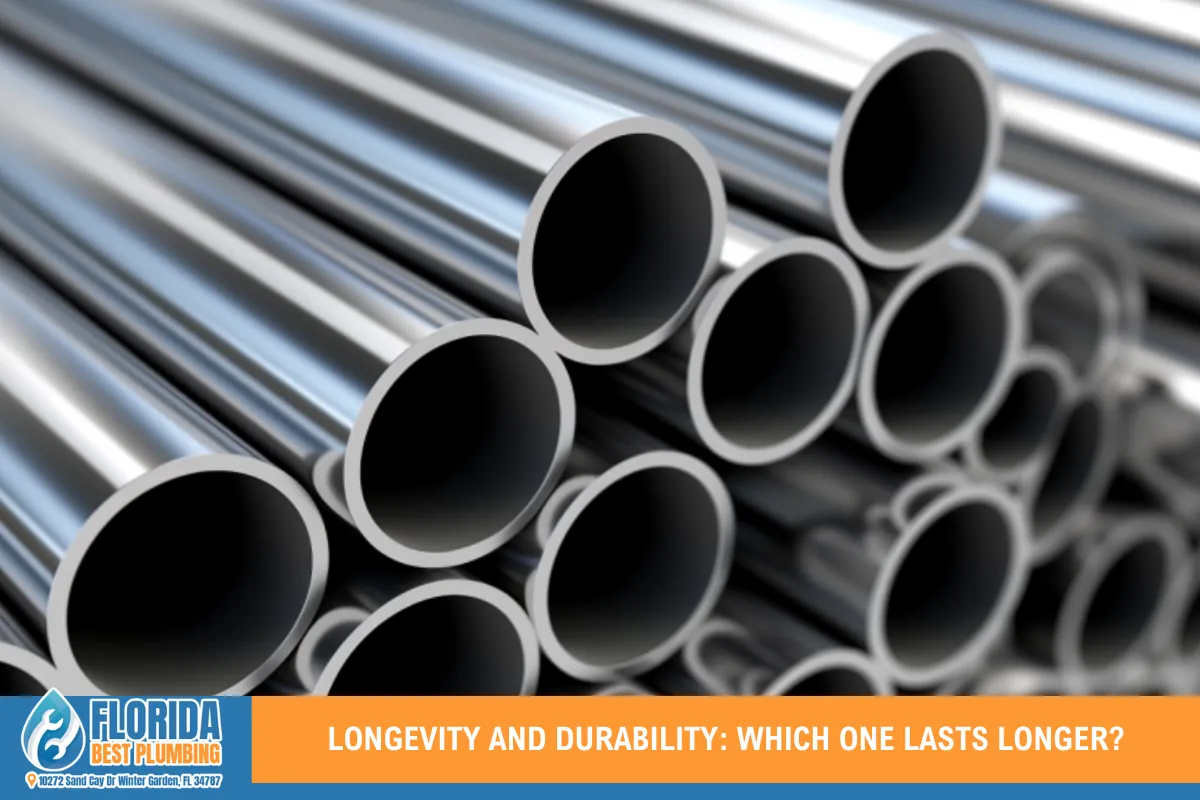
Longevity and Durability: Which One Lasts Longer?
Budget matters. PVC materials are usually cheaper per foot than PEX, but PEX can reduce labor because it installs faster with fewer fittings. Both materials can last decades when installed correctly.
Poor installation changes the math. Soil movement and local water chemistry can shorten the life of rigid supply lines. The presence of hard water can reduce the efficiency of water heaters, leading to increased energy costs and potential premature failure of the unit. Water softening systems can help mitigate the effects of hard water by removing excess minerals, improving water quality and extending the lifespan of plumbing fixtures and appliances.
The best value is often a mixed system: PEX indoors where flexibility matters, PVC for drains and certain exterior runs, plus filtration systems or softening if water quality calls for it. That approach can reduce hidden leaks, slab leaks, and future water damage restoration costs.
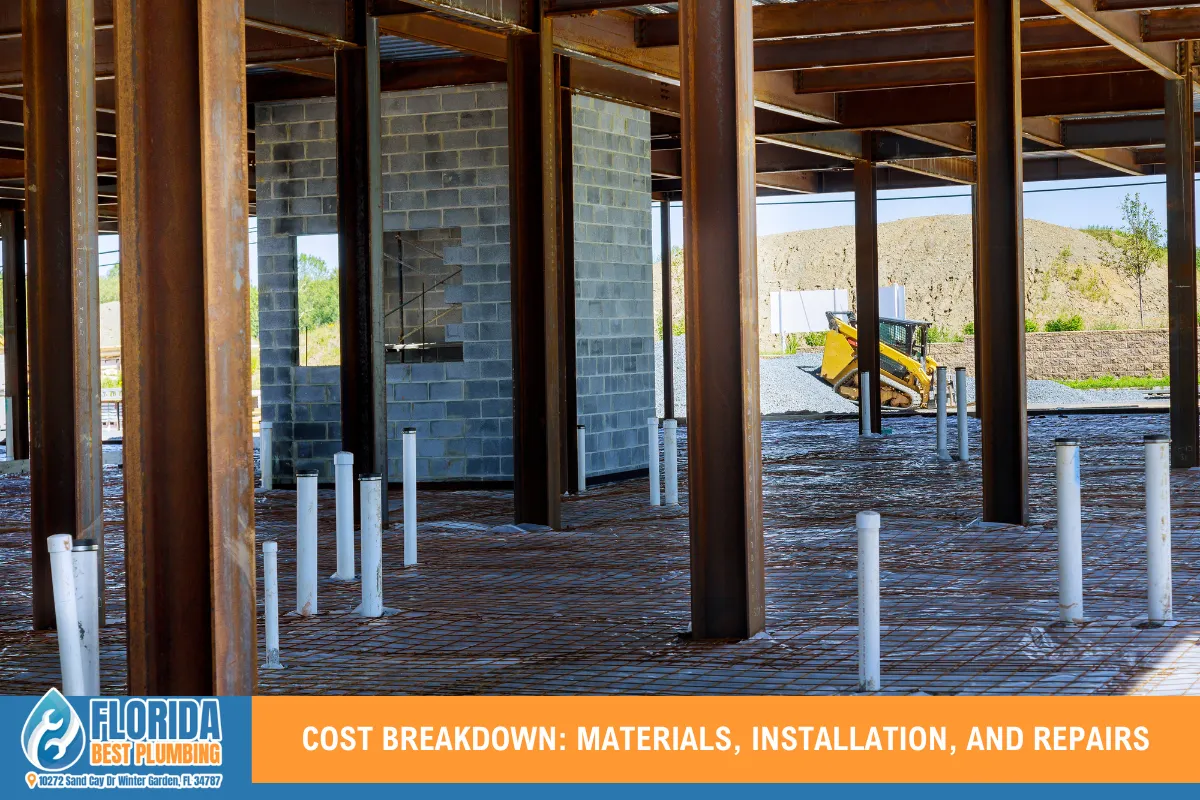
Cost Breakdown: Materials, Installation, and Repairs
PEX piping typically costs more per foot than PVC but can reduce overall labor costs due to easier installation and fewer fittings. Repairs on PEX systems are often simpler because of its flexibility and fewer joints. PVC is less expensive upfront for materials but may incur higher labor costs during installation and repairs due to the need for precise cutting and solvent welding. Considering long-term maintenance and emergency plumbing services in Winter Garden, investing in quality materials and expert plumbing can prevent costly water damage and plumbing problems.
Applications in Residential vs. Commercial Plumbing Around Winter Garden
Pipe choice differs between residential and commercial plumbing. In single-family homes, townhomes, and small multifamily buildings, PEX is common for interior water distribution because it fits tight spaces and speeds installation.
Commercial plumbing systems may rely more on copper, PVC, and CPVC for capacity, code, and fire or health requirements. Still, PEX is increasingly used in branches and tenant build-outs. Expert plumbers can design hybrid systems for residential and commercial properties.
Commercial plumbing services and commercial services often involve higher volume, more frequent professional inspection, and stricter maintenance than a typical home. Commercial properties also need plans that reduce downtime and protect tenants, customers, and employees.
When to Choose PEX, When to Choose PVC for Your Winter Garden Home
Most Winter Garden repiping projects benefit from PEX indoors and PVC in specific exterior and drainage roles. Choose PEX when upgrading aging galvanized or copper lines, remodeling bathrooms, adding fixtures, or dealing with past slab movement and leaks.
Choose PVC for yard irrigation, pool equipment plumbing where allowed, DWV lines, exterior cold-water service, and sewage drainage. If your home has noisy pipes, chronic low water pressure, recurring leaks, or discolored water, PEX may improve comfort as well as durability.
Homes built before the early 2000s should get a whole-house professional inspection before a full repipe decision. Routine plumbing maintenance is recommended to prevent emergencies and ensure the longevity of plumbing systems in Winter Garden homes.
Working With a Reliable Winter Garden Plumber for Lasting Results
The best material can still fail if installed poorly. Look for a licensed plumber with experience in PEX and PVC, slab-on-grade homes, local soil conditions, and clear customer satisfaction history. Reviews on Google or angie’s list can help, but ask direct questions too.
Ask how the plumber will transition between PEX, PVC, CPVC, and copper; how pipes will be protected from UV, abrasion, soil movement, and rodents; and whether the estimate covers repair services versus whole-home repiping. A trustworthy provider of winter garden plumbing services should offer clear pricing, realistic timelines, quality workmanship, and reliable service at a convenient time.
Emergency plumbing services are available 24/7 in Winter Garden to address urgent issues such as burst pipes or severe leaks. If you have a plumbing emergency, emergency plumbing support can limit damage. For non-urgent plumbing issues, schedule service for a service call that includes drain cleaning, water heater repair, water heater installation, and other plumbing services based on your plumbing needs.
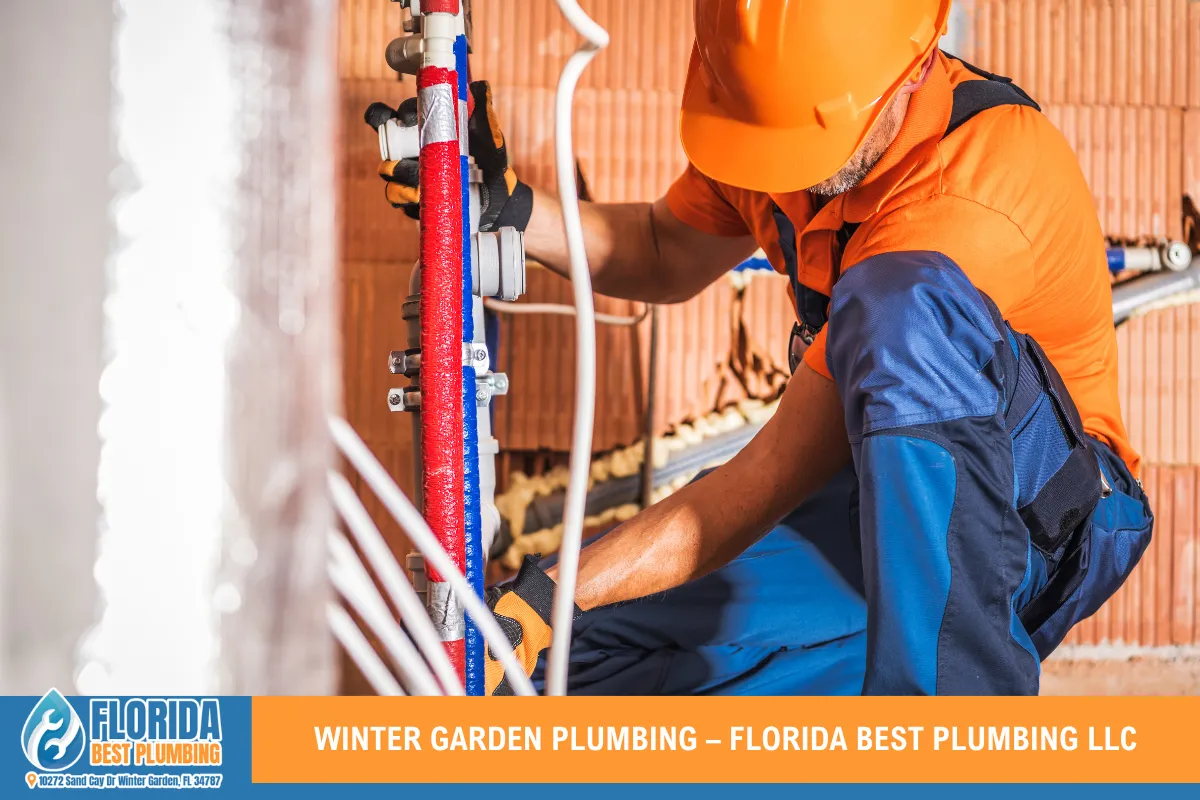
Winter Garden Plumbing Service – Florida Best Plumbing LLC
Upgrading your home’s plumbing or dealing with leaks? Florida Best Plumbing LLC is your trusted local team in Winter Garden, Florida. We understand the unique demands of Florida homes and utilize only the most reliable materials and techniques, tailored to your climate and water quality.
Need help deciding between PEX and PVC? Or looking for fast, honest repairs? We’ve got you covered. Our licensed plumbers handle everything from small repairs to full-system installations, with no unnecessary upselling or added costs.
Call us today at (407) 683-6644 —we’re available 24/7 for emergencies and same-day services.
Frequently Asked Questions
Is PEX safe for drinking water in Winter Garden homes?
Yes. Modern PEX approved for potable water meets state and national standards when installed correctly. Fittings and manifolds must also be listed for potable use to protect water quality and customer satisfaction. If taste, odor, or local water concerns remain, combine PEX with whole-home or under-sink filtration systems.
Will PEX or PVC help reduce slab leak problems in Winter Garden?
PEX can help reduce slab leak risk when water lines are rerouted through walls or ceilings instead of staying under the slab. Flexible PEX also tolerates small foundation shifts better than rigid pipe. Any home with past slab leaks should discuss PEX rerouting with a local winter garden plumber.
Can I mix PEX and PVC in the same plumbing system?
Yes. Mixing materials is common when the correct transition fittings are used and Florida plumbing codes are followed. A typical setup uses PEX for interior hot and cold distribution, PVC for exterior cold lines and drains, and approved adapters between materials.
How does PEX hold up to Florida’s hot attic temperatures?
PEX can be routed through attics in Winter Garden if it is protected from direct UV sunlight and installed within manufacturer temperature guidelines. Insulation helps maintain temperature and reduce energy loss from water heaters. Many local homes use attic PEX successfully when installed by experienced expert plumbers.
Should I replace my existing PVC supply lines with PEX if they are not leaking?
Not always. If PVC or CPVC supply lines are performing well and meet code, immediate replacement may not be necessary. Consider PEX during major remodels, bathroom additions, recurring plumbing problems, or repeated leaks. A professional inspection is the best next step before approving a full repipe.
Read Sink Repair Guide: How Professional Plumbers Fix Leaks, Clogs, and Damaged Fixtures
How Much Does a Plumber Cost to Fix a Pipe in Winter Garden, Florida?

Leak Detection in Oakland: Find Hidden Plumbing Leaks
Need Leak Detection in Oakland? Learn why your water bill is high, how to check for hidden plumbing leaks, and when to call a local plumber.

Commercial Plumbing in Ocoee for Offices & Restaurants
Commercial Plumbing in Ocoee for offices and restaurants. Florida Best Plumbing LLC helps with maintenance, drains, leaks, fixtures, and more.

Emergency Plumbing in Montverde for Sewage Backup Help
Need Emergency Plumbing in Montverde for a sewage backup? Learn when to call Florida Best Plumbing LLC for safe, 24/7 plumbing help in Central Florida.
Faucet Replacement in Clermont, Florida
A recently completed faucet replacement project in Clermont, Florida, with practical guidance for local homeowners planning similar work.

Shower Replacement in Minneola: What to Check First
Planning Shower Replacement in Minneola? Learn what to check first, from plumbing access and leaks to permits, fixtures, drainage, and walls.

Bathroom Plumbing in Horizon West Remodel Checklist
Planning a remodel? Use this Bathroom Plumbing in Horizon West checklist to prepare fixtures, drains, water lines, permits, and leak prevention.