

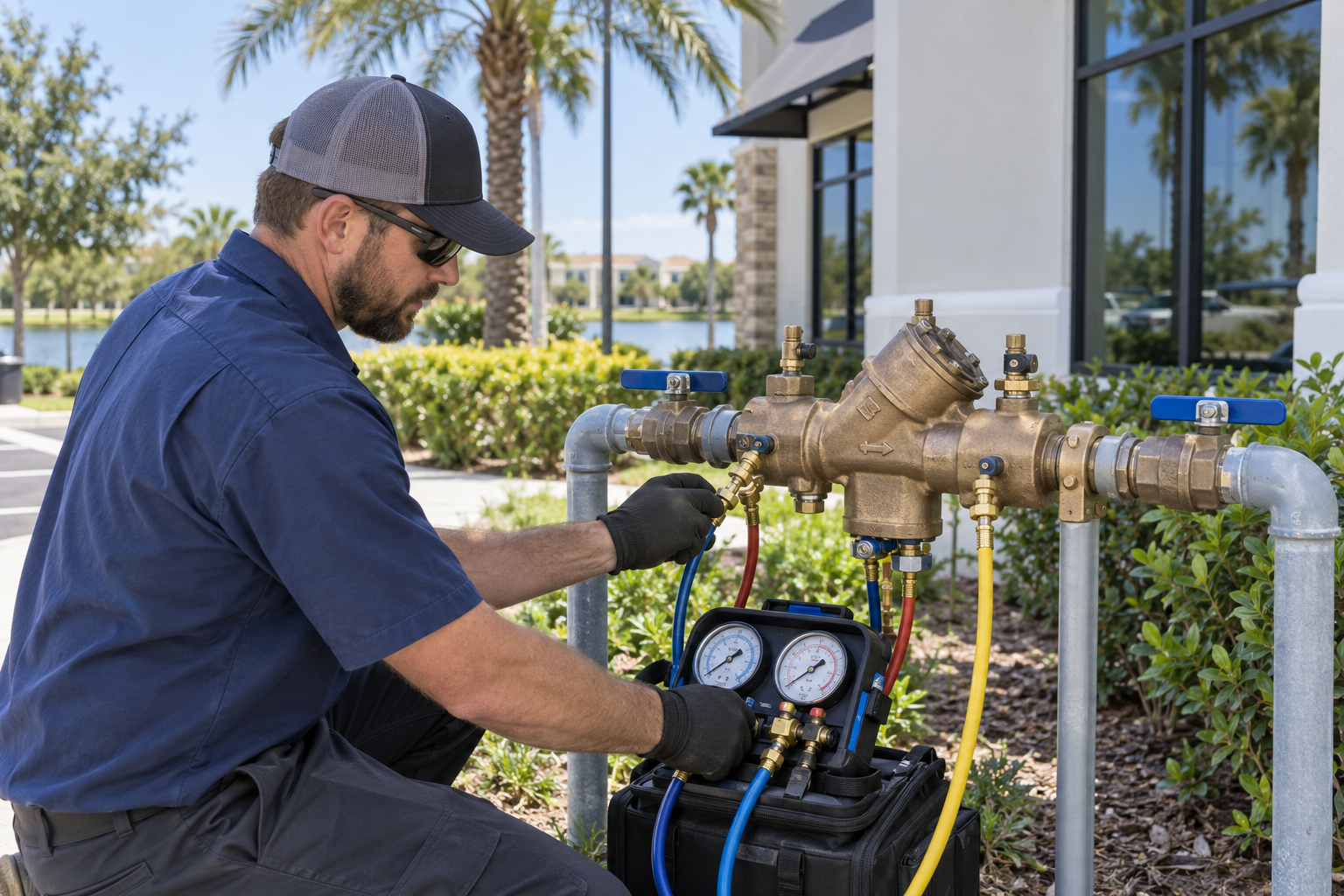
Backflow Testing in Winter Garden is an important responsibility for commercial property owners because it helps protect the public water supply, supports code compliance, and reduces the risk of plumbing problems that can disrupt daily operations. If your property has irrigation systems, fire suppression lines, restaurant equipment, medical fixtures, or other plumbing connections that could create a cross-connection, a properly working backflow prevention assembly is not optional. It is a key part of keeping drinking water separated from potential contaminants.
Florida Best Plumbing LLC provides residential and commercial plumbing services in Winter Garden and nearby Central Florida and Orange County communities, including backflow testing and certification. For business owners, property managers, and facility teams, the goal is simple: confirm that the device is working as intended, document the test, and address issues before they become compliance or safety concerns.
Why Backflow Testing in Winter Garden Matters for Commercial Properties
Backflow happens when water moves in the wrong direction inside a plumbing system. Instead of clean water flowing from the public supply into a building, water from the property can be pulled or pushed back toward the potable water line. This can happen because of backpressure, such as pressure from pumps or boilers, or backsiphonage, which can occur when pressure drops in the public water main.
In a commercial setting, that reverse flow can matter a great deal. A restaurant may have chemical dispensers, dishwashing equipment, and food prep plumbing. A dental office may have specialized equipment connected to water lines. A retail center may have irrigation systems with fertilizers or stagnant water. An office building may have fire protection systems that hold water for long periods. Each of these situations can create conditions where a backflow preventer is required to protect the water supply.
The U.S. EPA cross-connection control manual explains how cross-connections can affect drinking water systems and why prevention programs are used by water providers. Local requirements can vary by utility, property type, and device, but the purpose is the same: verify that approved backflow assemblies are operating correctly.
What Backflow Testing Checks
A backflow preventer contains internal components that open and close based on pressure. Over time, those parts can wear, collect debris, or fail to seal properly. Testing confirms whether the assembly holds pressure and performs the way it was designed to perform.
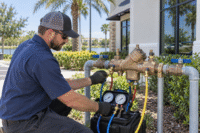
During Backflow Testing in Winter Garden, a plumbing professional uses test equipment to evaluate the assembly according to the applicable procedure for that device type. The test checks whether valves, relief components, and pressure differentials meet required standards. If the assembly passes, documentation can be prepared for the property or the appropriate authority, depending on the local process.
If the device does not pass, the problem may be caused by worn rubber parts, a fouled check valve, damaged internal components, or improper installation conditions. In that case, repair or replacement may be needed before the device can be retested and certified. Finding a failure during a scheduled test is usually much better than discovering it during an inspection deadline or after a plumbing issue has already affected the property.
Commercial Properties That Often Need Testing
Many Winter Garden commercial properties have backflow prevention devices because they use water in ways that create potential cross-connections. Restaurants, coffee shops, medical offices, dental practices, salons, schools, retail plazas, industrial spaces, warehouses, and properties with irrigation systems may all have assemblies that require periodic testing.
Multi-tenant buildings and shopping centers can be especially complicated because several businesses may share water service, irrigation zones, or fire protection infrastructure. A property manager may be responsible for tracking testing dates, coordinating access, and keeping records organized. Missing a required test can create administrative headaches, and an untested device can leave the property exposed to preventable risk.
For buildings near busy areas of Winter Garden, including commercial corridors and mixed-use properties, plumbing reliability is also part of customer experience. A failed backflow assembly can lead to service interruptions, urgent repairs, or failed compliance checks. Routine testing helps keep this small but important part of the plumbing system from becoming a larger issue.
How Backflow Testing Supports Compliance
Backflow testing is not just a maintenance preference. Water providers and local authorities commonly require certain commercial assemblies to be tested at regular intervals, often annually, though the exact schedule depends on the device, use, and local utility requirements. Keeping up with testing helps demonstrate that the property is taking reasonable steps to protect potable water.
Good records matter. Commercial owners should keep copies of test reports, repair documentation, and any notices from the water provider or municipality. When a property changes tenants, expands, adds irrigation, installs new equipment, or modifies plumbing, it is wise to confirm whether the existing backflow protection still matches the use of the building.
Florida Best Plumbing LLC can help commercial customers understand the testing process and provide backflow testing and certification as part of a broader plumbing service relationship. The company is licensed and insured and also handles services such as emergency plumbing, leak detection and repair, drain cleaning, sewer line repair, repiping, fixture repair, and water heater installation or replacement.
Signs a Backflow Assembly May Need Attention
Backflow preventers are often installed outside, in mechanical rooms, near meters, or at irrigation connections, so they may not be something a business owner looks at every day. Still, there are warning signs that deserve attention. Visible leaking around the assembly, corrosion, unusual water discharge, damaged shutoff valves, or evidence that the device has been hit by landscaping equipment can all point to a problem.
Changes inside the building can also be relevant. Low water pressure, discolored water after plumbing work, or repeated issues with connected equipment should be evaluated by a plumbing professional. These symptoms can have several causes, but they should not be ignored in a commercial property where uptime and water quality are both important.
Even when there are no visible symptoms, testing is still necessary if the device is subject to periodic testing requirements. A backflow assembly can look fine from the outside and still fail an internal pressure test.
Planning Ahead for a Smooth Test
Commercial backflow testing is easier when the property is prepared. Make sure the device is accessible and not blocked by vehicles, locked gates, stored materials, landscaping, or tenant equipment. If the assembly serves a system that may need brief isolation during testing, coordinate with the appropriate tenant, maintenance contact, or manager in advance.
It also helps to keep prior test records available. Previous reports may identify the device type, location, serial number, and past repair history. This information can make scheduling and documentation more efficient, especially for properties with more than one assembly.
For property managers who oversee multiple buildings, setting reminders before the due date can prevent last-minute scheduling stress. A planned test is easier to coordinate than a rushed response to a notice or inspection issue.
FAQs About Commercial Backflow Testing
How often is Backflow Testing in Winter Garden required?
Many commercial backflow assemblies are tested annually, but requirements can depend on the local water provider, assembly type, and property use. Property owners should follow notices from their utility or authority having jurisdiction and keep testing records on file.
What happens if a backflow preventer fails the test?
If a device fails, it typically needs repair, cleaning, or replacement before it can pass a retest. The specific solution depends on the assembly type and the failed component. A plumbing professional can explain the issue and complete the next steps needed for certification.
Do all commercial buildings need a backflow preventer?
Not every building has the same requirement, but many commercial properties need backflow protection because of irrigation, fire lines, food service equipment, medical equipment, chemical systems, or other cross-connection risks. A qualified plumber or local water authority can help determine what applies to a specific property.
Can backflow testing interrupt business operations?
Testing is usually straightforward, but some systems may need brief access or isolation depending on how the device is installed. Planning ahead with tenants, staff, or facility managers can help reduce disruption.
Work With a Local Plumbing Company
Commercial plumbing needs are easier to manage when you work with a local team that understands the area and provides a range of services. Florida Best Plumbing LLC serves Winter Garden and nearby Central Florida communities with residential and commercial plumbing support, including 24/7 emergency service listed on the company website.
If you want help with testing, documentation, or other plumbing concerns, visit Florida Best Plumbing LLC for local plumbing services. If your commercial property needs Backflow Testing in Winter Garden, contact Florida Best Plumbing LLC to schedule service and keep your plumbing responsibilities on track.
Faucet Replacement in Clermont, Florida
A recently completed faucet replacement project in Clermont, Florida, with practical guidance for local homeowners planning similar work.

Shower Replacement in Minneola: What to Check First
Planning Shower Replacement in Minneola? Learn what to check first, from plumbing access and leaks to permits, fixtures, drainage, and walls.

Bathroom Plumbing in Horizon West Remodel Checklist
Planning a remodel? Use this Bathroom Plumbing in Horizon West checklist to prepare fixtures, drains, water lines, permits, and leak prevention.
Garbage Disposal Repair in Dr. Phillips Humming Fix
Need Garbage Disposal Repair in Dr. Phillips? Learn why your unit hums but will not spin, what to check safely, and when to call a local plumber.
Toilet Repair in Gotha: Running Toilet Water Waste
Learn how much water a running toilet can waste and when to schedule Toilet Repair in Gotha with Florida Best Plumbing LLC for local homes and businesses.
Backflow Testing in Winter Garden for Commercial Sites
Need Backflow Testing in Winter Garden? Learn why commercial properties schedule annual checks to protect water quality and stay inspection-ready.